Laughter as Liberation: How Chinese Women Are Rewriting the Rules Through Stand-Up
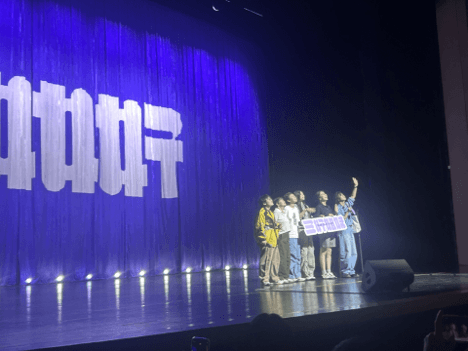
I used to think a comedy show was just a place to escape. But last September, in a theatre in Suzhou, I found a new world.
On stage, a lineup of all-women comedians-Huoguo, Axiu, Wang Ying, Wang Dadao, Wang Xiaoli, Xiaopa-They were not just telling jokes. They were dissecting life with a humour so sharp and so honest it felt like a collective exhale. They were talking about the things we’d been told were too private, too messy, or too ‘niche’ to be funny: divorce, menstrual shame, the weight of being an unmarried woman, the absurdity of workplace dress codes. This wasn’t just stand-up comedy. It was a narrative revolution, and they were rebuilding the structure of public conversation, one punchline at a time.
What Is Chinese Women’s Stand-Up?
Simply put, it’s comedy from a female perspective. But that simple definition holds a seismic shift. For decades, our comedy stages were dominated by male voices, often
recycling tired stereotypes of the nagging wife or the demanding mother-in-law. Female experiences were the punchline, told from the outside.
Now, women have taken the microphone. They are sharing their stories about their careers, their bodies, their families, and their place in a changing society. They use self-deprecation, satire, and sharp observation not just for laughs, but to name shared experiences. When Wang Xiaoli jokes about the freedom of being 45 and unmarried, or when Echo imagines menstruation as a spectacular nosebleed to combat shame, they are doing more than performing. They are creating a shared language for half the population.
Of course, this rise has been met with noise. Critics dismiss it as “not funny,” accuse it of “repeating tragic narratives,” or warn against “slipping into the mud of gender opposition.” There’s a nostalgic call to return to a “simpler time” of comedy, conveniently forgetting that this so-called golden age was often built on misogynistic tropes that asked women to accept their body or image being ridiculed with bad taste.
These criticisms, while varied, share a common thread: a deep discomfort with women speaking publicly about systemic issues. Labelling their truth-telling as “creating conflict” is a way to police the boundaries of discussion. Claiming their stories are “not universal” ignores the fact that women’s experiences are universal human experiences. And suggesting they should be “funnier” or “less angry” is a demand that they sand down the edges of their reality to make it more palatable for the status quo.
This isn’t about a lack of humour. It’s about power.
True humour has always been rooted in truth, and for the first time, women are defining that truth on their own terms. The “unfunny” parts often contain the most profound resonance—the moment of recognition that makes a woman in the audience think, “I’m not alone.”
The magic of this movement was crystallised for me at that “Three Good Sisters” show. During an interaction, an impolite audience comments about the appearance of comedian Wang Dadao and her mother. A tense silence fell.
But then, something unbelievable happened. The silence was broken not by one voice, but by many. A wave of collective disapproval—boos, shouts, and a clear, sharp “Get out!” from a woman in the crowd—flooded the room. Wang Dadao, with incredible poise, turned the moment into a masterclass in wit, firing back with sharp, improvised retorts that had the audience roaring in support.
In that moment, the slogan “comedy brings girls together” was no longer just words. It was a lived reality. We were in a safe space, a temporary shelter built by shared understanding, and we would protect it together. It was messy, real, and more empowering than any perfectly polished joke could ever be.
The work of these comedians is not about manufacturing conflict. It’s about refusing to accept a false peace built on silence. They are not “spoiled” for speaking up; they are courageous for reclaiming their narratives.
So let them continue. Let them speak until the “sensitive” topics lose their taboo weight. Let them joke until the female experience no longer needs a special disclaimer to be understood. Their laughter is not just entertainment; it’s a tool, a weapon, and a warm embrace all at once. They are showing us that the most radical act can sometimes be to stand in the light, hold a mic, and finally, joyfully, say the things everyone told you to keep to yourself.


